
Introduction
Have you ever found yourself thinking: “When I graduate, I’ll be happy. When I get married, then I’ll be happy”? As I am an imperfect human being as you are, I was there too. Like many other people, I used to feel more anxious, constantly looking ahead, hoping for a lighter days and in turn disregarding the present moment. Prince Ea calls this the “And-then-people”. But why do we think this way? We simply didn’t learn to be happy in the now. Stress at work or school, personal issues and fear of the future keep us in a daily rut. We drag ourselves through the week days while constantly waiting for the weekend. We take things or people for granted and do not appreciate what we already have. This might even come so far that we begin to develop burnout, anxiety or depression. But this doesn’t have to be our final destination. “What about the now?” is what the band Northlane asked themselves with the song “Quantum Flux” I would like to share with you today:
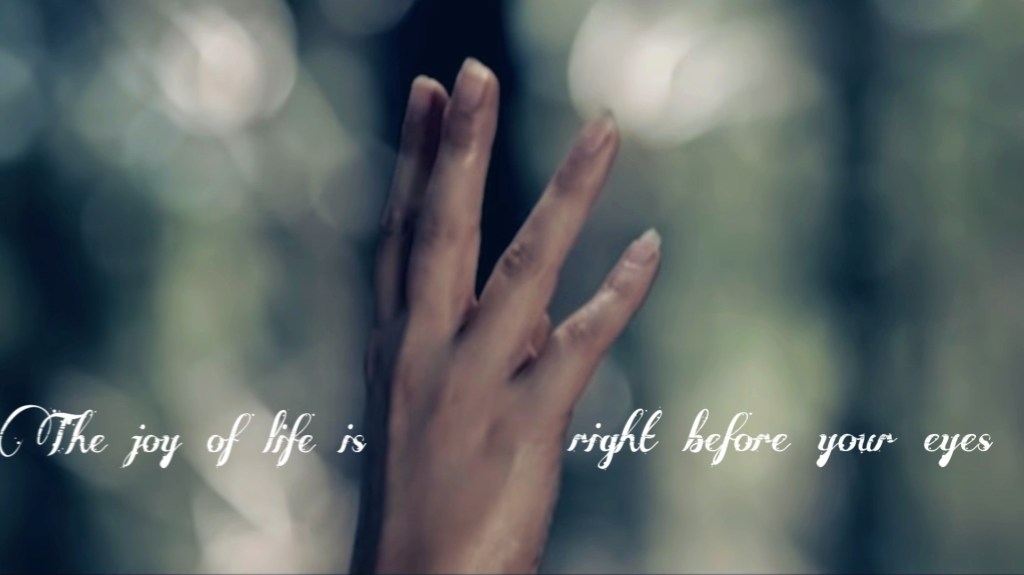
Can’t you see the joy of life is right before your eyes
“Quantum Flux” – Northlane
Infinite bliss, infinite love
Take a chance, close your eyes and just dream
Song interpretation
This song holds a special place in my heart because it provides a message that not only young people should hear, but people of all age. It is a message, for us all to find a new way of living. One in which we can see all the happiness and joy that is already around us with open and eager eyes. Ex-vocalist Adrian Fitipaldes stated in his lyrical explanation of the song that it is about enjoying life in the now and being content with what we have despite living in an imperfect world: “Even in the world of darkness […] we can’t help but see the perfection in good and evil and the balance that is there”. I can only angree with Adrian because both are part of our life here on earth, and acceptance of it can “give you a deep sense of happiness and peace in the now”, as he says. Adrian also stated the problem of us humans wanting and desiring so much, always running after more possessions. This reminded me of Platons idea of a happy life. His position is that having (numerous) possessions is no sufficient condition for living a happy life. He states that it is important for humans to have the ability to use these possessions to their own well-being.
The benefits of practicing gratitude
What does this mean for us? We need to learn to be grateful for what we already have. To use what we already have and see it as something valuable and not self-explanatory. This can have many benefits for us. Accoring to “The Science of Gratitude” (2018), gratitude can have positive effects on the individual, for example …
- increased happiness and positive mood,
- more satisfaction with life,
- being less materialistic,
- being less likely to experience burnout and
- greater resiliency as well as
- a possible increase in job satisfaction.
Gratitude can have a positive effect on our mental and physical health. It aids as a protective factor against stress and depression (Wood et al., 2008), leads to a positive affect, sleep quality, energy, self-efficacy, and lower cellular inflammation (Mills et al., 2015). On a neurological level, the more we express gratitude, the more often dopamine releases in our brain (Carter, 2009).
How to practice gratitude
So how do we practice gratitude? One way that helped me is meditation. This practice can help you increase your awareness in your day to day life and make you more susceptible for things to be grateful for in the present moment. What I like to do as well is keep a daily gratitude journal. At the end of each day, I sit down and write about my day and highlight the things I am most grateful for. You might ask: But what if something bad happened? How can you be grateful for i.e. a lie or a betrayal? It’s okay to experience frustration or anger about something bad first. But even if something caused you pain, you can be grateful. By saying: “Thank you for this experience” you lean into acceptance and transform the event or action that happened into something that you learned from. It happened for you, to grow you. No matter how many good or bad expriences you had, after several weeks of gratitude practice, you really start to feel the positive effects. You give more easily to others, have a lighter outlook on life and anticipate what is coming without dread or stress. Try to make gratitude part of your way of life. Because when we are grateful for what we already have, many more good things will start come into our life. Or, how Tony Robbins phrased it: “When you are grateful, fear disappears and abundance appears.”
References:
– Prince Ea (2019). Stop wasting your life. URL: https://www.youtube.com/watch?v=M2NDQOgGycg
– https://genius.com/Northlane-quantum-flux-lyrics
– UNFD (2013). Northlane – Quantum Flux – Lyrical Explanation. URL: https://www.youtube.com/watch?v=pW5AH9nMTWM
– Kori D. Miller (2019). 14 Health Benefits of Practicing Gratitude According to Science. URL: https://positivepsychology.com/benefits-of-gratitude/
– Allen, S. (2018). The science of gratitude. Conshohocken, PA: John Templeton Foundation.
– Wood, A. M., Maltby, J., Gillett, R., Linley, A., & Joseph, S. (2008). The role of gratitude in the development of social support, stress, and depression: Two longitudinal studies. Journal of Research in Personality, 42(4), 854-871.
– Mills, P.J., Redwine, L., Wilson, K., Pung, M.A., Chinh, K., Greenberg, B.H., Lunde, O., Maisel, A., Raisinghani, A. (2015). The role of gratitude in spiritual well-being in Asymptomatic heart failure patients. Spirituality in Clinical Practice, 2(1), p. 5-17.
– Carter, R. (2009). The human brain book. London, UK: Dorling Kindersley Limited


 The Deeper Meaning
Leave a comment